Alan Hale Jr.’s Private Battle: How The ‘Gilligan’s Island’ Skipper Escaped His Movie Star Father’s Shadow
He looked just like his dad, but Alan Hale Jr. had to find his own way to stardom

By the time Alan Hale Jr. reached the later years of his life, he no longer seemed to be searching for anything. The long road—through studio backlots, B-movies, short-lived television series, wartime service, sales jobs and years of steady but unspectacular work—had finally led him somewhere he could rest. For decades, he had carried a famous name that was never a burden in the usual sense, but was always present, always defining the first impression when he walked into the room. What changed everything was not success in the traditional Hollywood sense, but ownership. When Hale became the Skipper on Gilligan’s Island, he found something he had spent much of his life circling: a role that belonged entirely to him.
The series itself was famously dismissed by critics when it premiered in 1964. Its premise—a three-hour tour gone oh-so-wrong—was absurd even by sitcom standards, and its broad comedy made no attempt to disguise that fact. Yet Gilligan’s Island struck a deep and lasting chord with audiences, becoming one of classic TV’s most durable pop-cultural fixtures. For its cast, that success came with a price. The characters were so vivid, so immediately identifiable, that many of the actors struggled to escape them once the series ended in 1967. Hale, however, responded differently than most. He never spoke ill of the show, never distanced himself from it and never treated it as something he had outgrown. Instead, he embraced it as a gift.
Those who worked with him noticed it immediately. Lloyd Schwartz, son of series creator Sherwood Schwartz, later recalled that Hale carried himself with an openness that was impossible to miss. “He’s obviously a very large man,” he reflects, “and when you went up to him, he kind of embraced you and was always a slap-on-the-back kind of guy and very upbeat about everything.”
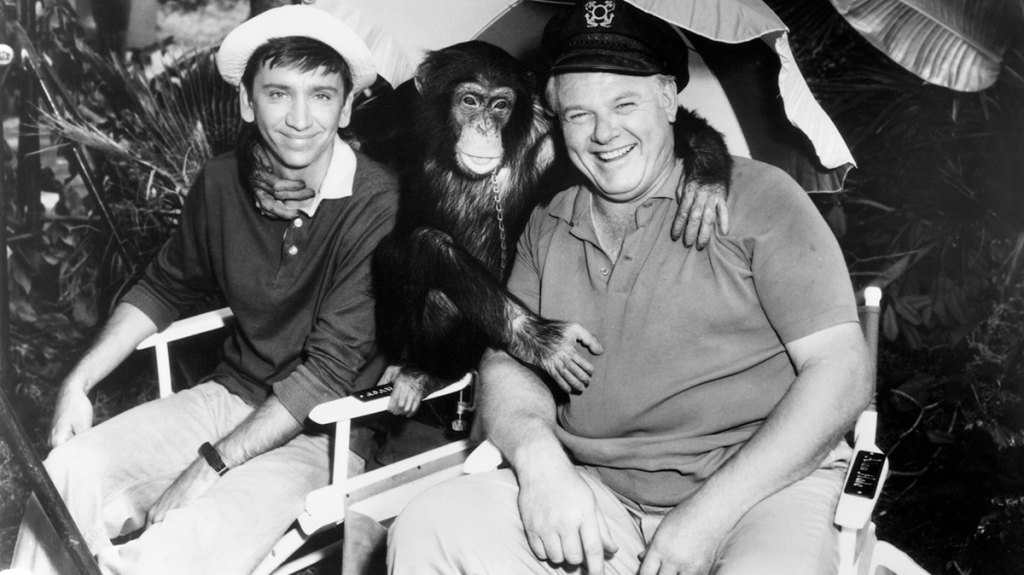
His conversations felt more like a reunion than a meeting. The Skipper, with all his bluster and authority, worked precisely because Hale infused him with something deeply human: affection. No matter how loud the tirades or how broad the slapstick, there was never any doubt that Gilligan was, as Hale famously put it, his “Little Buddy.”
That affection extended beyond the screen. Hale did not merely play the Skipper; he lived comfortably alongside him. In later years, he greeted customers at his seafood restaurant wearing the Skipper’s cap, visited hospitals in character and met fans with the same enthusiasm he had brought to the set decades earlier.
The weight of a name

Long before Alan Hale Jr. ever stepped in front of a camera on his own terms, the name he carried already meant something in Hollywood. Alan Hale Sr. was not a star in the romantic, marquee sense, but he was something far more durable: a fixture. Born in 1892, he entered motion pictures at a time when the industry itself was still inventing its rules. By the early 1910s, when a single reel could be considered a feature, Hale Sr. was already working, adapting as filmmaking evolved from novelty to business, from silence to sound and from regional productions to a fully industrialized studio system.
By the 1920s and 1930s, Hale Sr. had become one of the most recognizable character actors in American cinema. He possessed a broad physicality with a large frame, an expressive face and a booming laugh that made him instantly readable onscreen. Early in his career, that visibility often translated into villainy. Newspapers of the era described him, with a mixture of admiration and amusement, as “perhaps the most hated man in the world,” citing his roles in epic productions like The Covered Wagon and The Four Horsemen of the Apocalypse. Yet villain or hero, Hale brought a grounded humanity to his performances, which made him invaluable to directors who needed reliability above all else.
Hale Sr. appeared in more than 200 films over several decades, moving effortlessly from silent pictures into talkies without the career-ending disruption that claimed many of his contemporaries. He became especially associated with swashbucklers and adventure films, most famously portraying Little John in three different Robin Hood adaptations spread across nearly three decades. His frequent collaborations with Errol Flynn (13 films in all) cemented his image as the quintessential loyal companion: hearty, steadfast, and good-humored. In an industry obsessed with youth and novelty, Hale Sr. endured by being adaptable and indispensable.
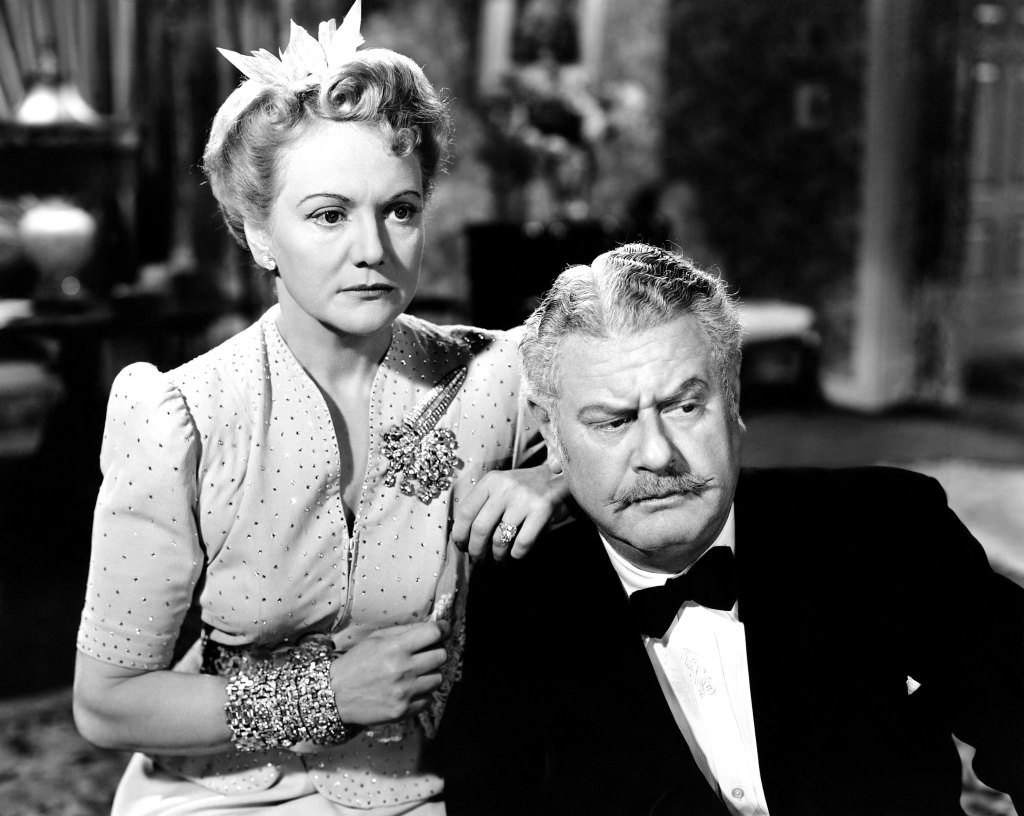
Offscreen, he embodied the same workmanlike ethos. He directed films when opportunities arose and even turned his practical instincts toward invention, developing improvements for everyday problems—including a flip-up movie theater seat that reflected both ingenuity and an understanding of the audience experience. He was not a man content to wait for opportunity; he created it where he could. That philosophy sustained him through the inevitable fluctuations of a long career, including periods when roles slowed and attention drifted elsewhere.
And to a young boy who bore his name and shared his physical resemblance, he was an unavoidable comparison point—not because of ego or expectation, but because the industry itself never forgot who Alan Hale was. What made that weight especially complicated was the absence of pressure at home. Hale Sr. was not a domineering patriarch or an overbearing mentor. If anything, he understood too well how fragile careers could be. In interviews during the 1930s, he spoke candidly about moments when work dried up and his belief that survival in Hollywood required adaptability, not entitlement.
The irony was that the very qualities that made Hale Sr. so respected were also what made his shadow so long. He had not burned brightly and faded; he had simply remained. For his son, that meant that forging an identity would not require rebellion or rupture, but something far more difficult: patience, persistence and the willingness to be seen as unfinished for a very long time.
Refusing shortcuts

Alan Hale Jr. was born Alan Hale MacKahan on March 8, 1921, in Los Angeles, into a household where show business was neither exotic nor romanticized. His mother, Gretchen Hartman, had worked as a silent film and stage actress, and his father’s career meant that sets, studios and backstage corridors were familiar environments rather than aspirational ones. From an early age, Hale Jr. was exposed to acting as a craft rather than a guaranteed inheritance.
That distinction mattered to him. As the resemblance between father and son became more apparent, so did the comparisons. Hale Jr. never denied the influence, but he bristled at the assumption that similarity meant imitation. In 1950, he addressed the issue directly, telling the Daily News-Post and Monrovia News-Post, “I can’t help it. I just act the way I know best. It’s not my fault if it comes out like Dad. You can’t live with a man for 21 years and not pick up some of the things he does. Actually, both of us act like my grandfather.”
During the early 1940s, press coverage frequently described him as part of a “second generation” of performers following their fathers into the business, a framing that emphasized lineage over individuality. He pushed back quietly but firmly. According to the Valley Times in 1946, “Had young Hale been the sort of son willing to bask in the glory of a famous father, his ‘break’ could have well come much sooner.” He refused his father’s offer to secure him a powerful agent and declined assistance in the form of dramatic instruction. “The only thing he did was retain his name,” the paper noted, “and that was his birthright.” The refusals, it emphasized, were “good-natured—and determined.”
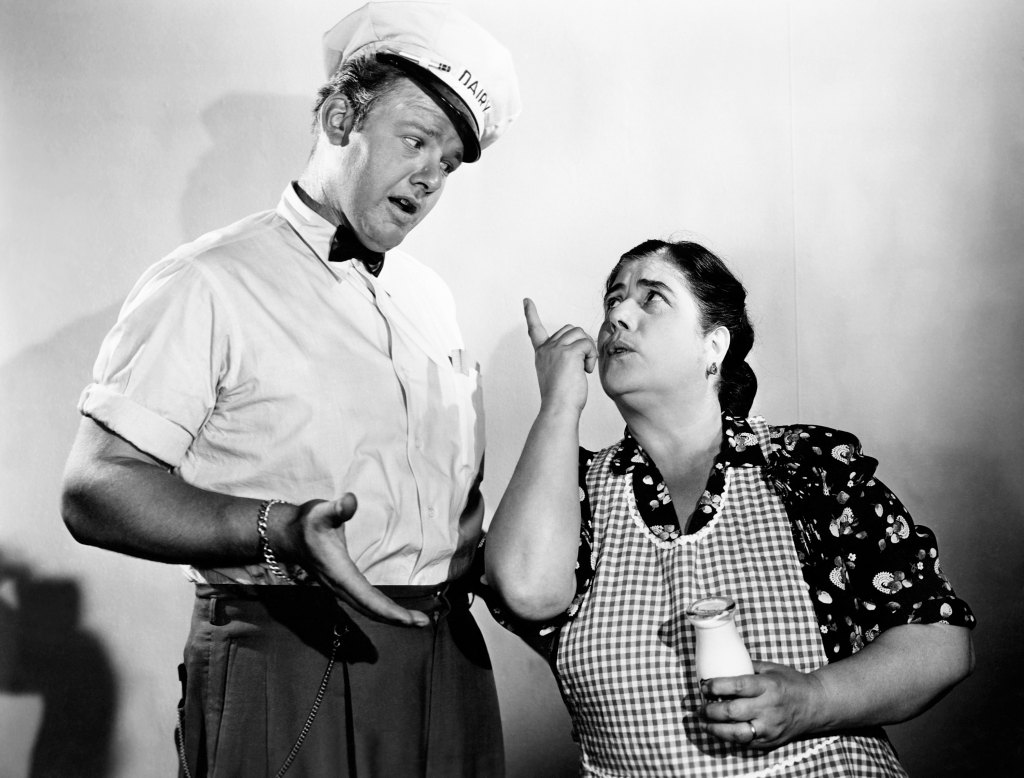
His early career reflected that resolve. He attended Hollywood High School and Los Angeles Junior College, briefly worked at a studio as a teenager and then drifted toward acting in fits and starts rather than in a straight line. One summer job failed to ignite anything lasting, and for a time it seemed as though the business might simply pass him by. When Paramount began seeking “flying cadets” for film roles, Hale Jr. seized the opportunity himself, landing work without leaning on family connections. Even then, progress was incremental.
World War II proved to be a turning point, both practically and psychologically. Hale Jr.’s first real acting opportunities came not from Hollywood features but from Army training films, where he learned how to perform efficiently and convincingly under constrained circumstances. In 1943, he joined the Coast Guard, serving for three years. Around the same time, he married Bettina Doerr, the beginning of a family life that would ground him even as his professional future remained uncertain.

When the war ended and Hale Jr. returned to civilian life, he pursued acting with renewed seriousness. Radio work, small theater productions and minor film roles followed. “He got every job himself,” the Valley Times observed, “with no outside help—and it wasn’t easy.” Yet throughout this period, his father remained a watchful presence, careful not to overstep. The elder Hale made only one visit to the set of It Happened on Fifth Avenue, where his son had finally landed what was considered a meaningful supporting role. When he left, the paper reported, “there was an added bulge to an already full-sized chest.”
Learning the long way around
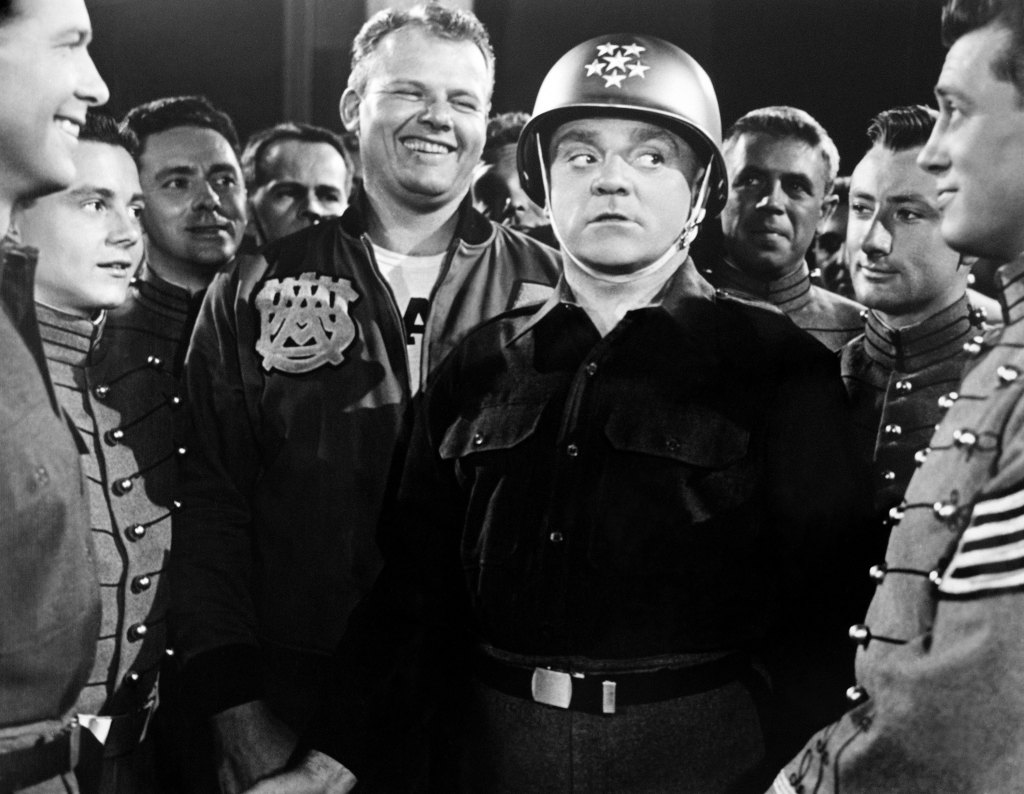
For Hale Jr., the years following World War II were not defined by sudden breakthroughs or rapid ascent. Like many actors of his generation, he found steady employment in B-pictures, the low-budget features that filled out studio schedules and neighborhood theaters. Far from dismissing them, he regarded those films as foundational. “The B-pictures were our training ground,” he said. “They were the backbone of our business. The day of B-pictures … there was nothing like it.”
Even with steady screen work, money was often tight. Hale Jr. supplemented his income through an array of side ventures, including nearly three-and-a-half years selling vacuum cleaners door to door, an experience he later described with unexpected affection. “I was becoming a great golfer,” he joked, “but the water bills were getting bigger, so I became a house-to-house salesman. And that was the way to really learn acting. You’re meeting people every moment and you must know how to understand them and to sell them.”
Through it all, Alan Hale Sr. followed his son’s progress closely, aware of the frustrations and setbacks, but respected the boundaries Hale Jr. had set. That restraint extended even to moments when opportunity seemed poised to bridge their careers directly. In 1950, father and son were scheduled to appear together in the feature Sons of the Musketeers, a symbolic pairing that would have united them onscreen at last. The project was abandoned when Hale Sr. died suddenly on January 22 of that year, at the age of 57.
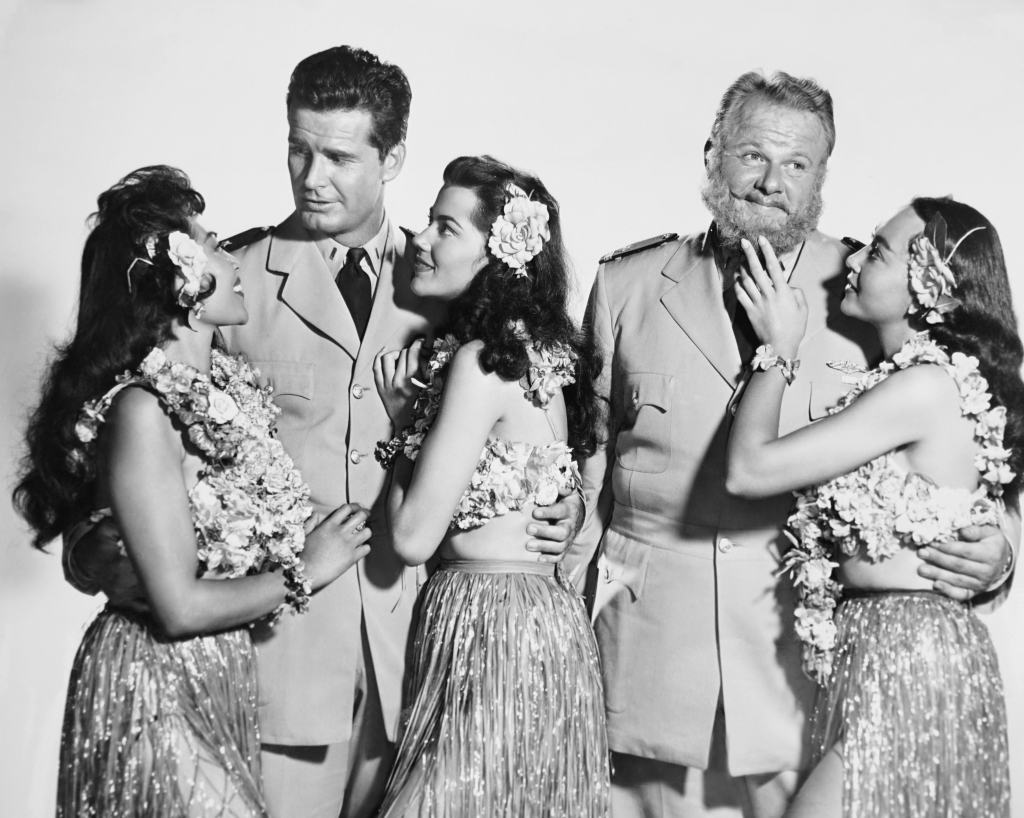
The loss marked a profound shift. Reflecting on the abandoned film later, Hale Jr. offered a characteristically candid assessment: “Perhaps it’s just as well. I’m sure I would have realized how immature an actor I really was alongside the old man.” It was not false humility so much as an acknowledgment that his journey was still incomplete. With his father gone, Hale Jr. quietly dropped the “Junior” from his professional name (at least for a time)—not as a rejection of lineage, but as a recognition that the responsibility to define himself now rested entirely with him.
Before the Skipper

By the time Hale Jr. entered the 1950s, television, still a growing medium, began offering him sustained visibility. One of his earliest and most prominent television roles came between 1950 and 1952, when he appeared in nine episodes of The Gene Autry Show as Tiny, the hero’s sidekick. It was familiar terrain. Things continued when he landed the lead in Biff Baker, U.S.A. in 1952, a Cold War–era adventure series that cast him as a globe-trotting American agent. The show ran until 1954 and, despite critical skepticism, found an audience.
He was as surprised by that response as anyone. “I can’t understand it,” he admitted to the Sacramento Bee in 1954. “I thought I was a flop. I went to San Francisco the other day and the reception floored me. You’d have thought I was Marilyn Monroe.” The disconnect between critical opinion and audience enthusiasm was not lost on him, and it reinforced a lesson he would carry forward: popularity and legitimacy did not always accompany each other.

That tension followed him into his next starring vehicle, Casey Jones, a Western series that aired from 1957 to 1958 and placed him in the title role of a railroad man navigating the dangers of the frontier. Once again, the show failed to win over critics, but once again, viewers responded. Hale Jr. had become a recognizable television presence.
In between series, he worked constantly, guest-starring on a wide range of shows that defined television’s golden age: Gunsmoke, Rawhide, Maverick, 77 Sunset Strip, Perry Mason, The Andy Griffith Show, My Favorite Martian and Here’s Lucy, among others. It was on The Andy Griffith Show that he casually referred to Don Knotts’ Barney Fife as “little buddy,” a throwaway line that would later take on unexpected significance. At the time, it was simply part of Hale Jr.’s natural vocabulary—a reflection of how he related to people, onscreen and off.
His ‘Gilligan’s Island’ era

When Gilligan’s Island began taking shape in the early 1960s, its tone was clear, but its casting was not. The premise was broad, even absurd, and creator Sherwood Schwartz knew that the characters would need to be instantly readable without tipping into cruelty or condescension. No role proved more elusive than that of the Skipper. He had to be authoritative without being frightening, physically imposing without seeming abusive and funny without undermining the emotional balance of the ensemble.
According to Lloyd Schwartz, his father was growing increasingly uneasy as casting dragged on. “Dad was upset because it was getting down to the wire,” he recalls. Then, one evening, fate intervened quietly. Sherwood Schwartz was dining with his wife at a restaurant when his attention was drawn to a man seated at another table. “That’s the guy,” he said, instantly certain—though he didn’t know the man’s name and didn’t approach him. The next day, he instructed the casting director to find him. The man was Alan Hale Jr.

At the time, Hale Jr. was working on a Western in Utah. Getting him back to Los Angeles was not simple. “After that dinner, Alan had flown out to Utah,” Lloyd explained, “but they got him to come back and do the test from whatever Western movie he was doing.” The logistics were improvised at best. Hale hitchhiked part of the way, caught a truck to Las Vegas and from there flew in to test opposite Bob Denver. It was hardly a glamorous entrance, but a fitting one.
From the moment he stepped into the role, something clicked. Hale’s physical presence established authority immediately, but it was his warmth that transformed the Skipper from a stock tyrant into a figure audiences could trust. And the relationship between the Skipper and Gilligan proved to be the show’s emotional anchor. No matter how loudly the Skipper bellowed or how often he struck Gilligan with his hat, there was never any doubt about affection. “That was the magic of the casting,” Schwartz says. “Everybody else who came in had failed the casting, because you had a big guy hitting the little guy and you just wouldn’t like him. But with Alan, you still knew Skipper liked Gilligan.”

Behind the scenes, Hale Jr. embodied the same professionalism that had defined his entire career. Lloyd Schwartz recalled a day when Hale took a serious fall during filming. Crew members rushed to his side, but Hale insisted he was fine and completed the day’s work. Only later did it become clear that he had broken his arm. “They finished,” Lloyd said, “and he said to Dad, ‘Do you need anything else?’”
The series premiered in 1964 and ran for three seasons. Critics dismissed it almost immediately, but audiences embraced it with enthusiasm. The cast became iconic, and the characters proved impossible to separate from the actors who played them. For many performers, that kind of identification became a professional trap. For Alan Hale Jr., it became something else entirely. It fixed him in the public imagination as something wholly his own.
“Alan did a few failed series and some other things,” observes Schwartz, “but he was always Alan Hale Jr. If you look at some photos, they look very, very similar, but he didn’t have the notoriety that Alan Hale Sr. did until he got Gilligan’s Island. He adored the character of the Skipper, and not just because he was a very loving guy. He suddenly had an identity.”
Owning the Skipper’s legacy
When Gilligan’s Island ended its original network run in 1967, the series quickly entered a second, longer life in syndication. For its cast, that afterlife brought mixed consequences. The characters were so deeply etched into popular culture that new roles became harder to come by and the industry often struggled to see past the island. Alan Hale Jr., however, approached that reality with a perspective shaped by decades of work that had never depended on illusion or ego.
He continued acting steadily, appearing in feature films throughout the 1970s and 1980s, including roles in Tiger by the Tail (1970) and Hang ’Em High (1968), and later in Back to the Beach (1987). On television, he remained a familiar presence, guest-starring on series such as Ironside, The Doris Day Show, McMillan & Wife, The Love Boat, Fantasy Island, Magnum, P.I., ALF, Growing Pains, and The Law & Harry McGraw. The work was consistent, if no longer central, and Hale accepted that balance without bitterness.
What distinguished him from many actors identified with a single iconic role was his refusal to disown it. In a 1964 interview with the Star-Gazette of Elmira, New York, he dismissed the idea that unhappiness or controversy were prerequisites for artistic credibility. “You’re not going to get much of an interview out of me,” he said. “I’m not in the least controversial. I love people and, if I have any enemies, they haven’t told me about it yet.”

When the interviewer suggested that outward cheer often masked inner dissatisfaction, Hale pushed back firmly. “There are a lot of actors who scream and cry,” he said, “but they’re as phony as a nine-dollar bill.” Complaining, he believed, was less a sign of torment than performance. “An actor’s ego must constantly be fed and soliciting sympathy is one way of feeding that ego.” Hale had little interest in that kind of theater. Attention, he understood, came in many forms — and he preferred affection to notoriety.
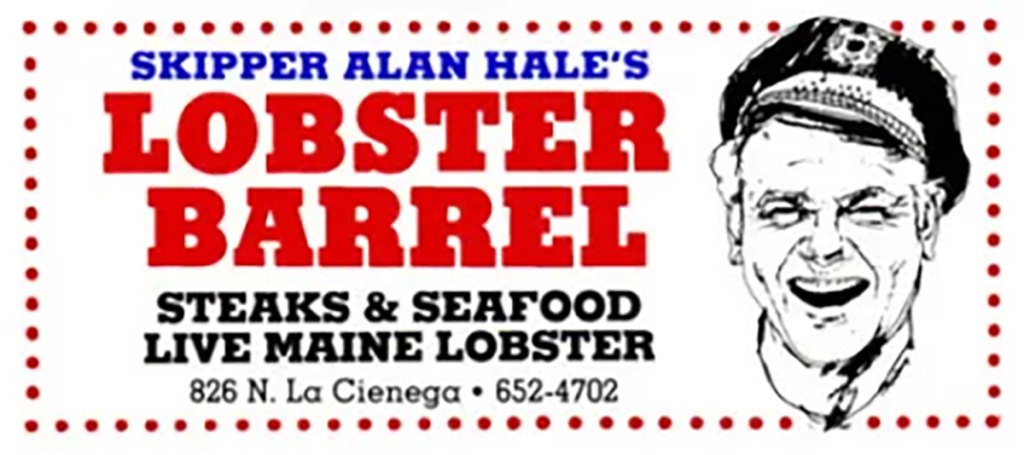
That philosophy shaped how he lived with the Skipper long after the cameras stopped rolling. From 1974 to 1975, he voiced the character in the animated series The New Adventures of Gilligan, and again from 1982 to 1983 in Gilligan’s Planet. In the mid-1970s, as noted earlier, he opened Alan Hale’s Lobster Barrel, a Los Angeles–area restaurant where he greeted customers wearing the Skipper’s cap. He visited hospitals in character, attended conventions with enthusiasm and met fans as if each encounter mattered—because to him and them, it did.

Television movies in the late 1970s and 1980s reunited much of the original cast, extending the show’s mythology while reinforcing its emotional bonds. In 1978’s Rescue from Gilligan’s Island, followed by 1979’s The Castaways on Gilligan’s Island and 1981’s The Harlem Globetrotters on Gilligan’s Island, Hale slipped easily back into the role that had become second nature. Reflecting on the first reunion, he told the Democrat and Chronicle, “We didn’t see each other for 12 years, but fortunately we were able to pick up where we left off. It dovetailed and came together.”

The experience, he said, was rooted in shared joy rather than nostalgia. “That’s the whole fun of this thing,” he explained. “You go home and your kid asks you what you did today. I know we aren’t going to the Cannes Film Festival, but it was such fun — the license we took, the pure nonsense. We’re all sentimental slobs and the show became such a personal thing.”

In his personal life, Hale found similar stability. His first marriage, to Bettina Doerr, ended in divorce after 20 years, but the two shared four children: Alan Brian, Chris, Lana and Dorian. In 1964, he married former singer Naomi Ingram, with whom he remained until his death. He died on January 2, 1990, at the age of 68, from thymus cancer.
Near the end of his life, Hale reflected on the reach of the role that had finally defined him. “I went around the world in 1974,” he recalled, “and when we landed in Beirut, a young soldier came to the ramp. He took one look at me and said, ‘Skipper, do not come ashore.’” The recognition still astonished him. “Japan, Germany, Spain,” he said. “I was among a hundred people who took a lovely ride up the Rhine River. Before it was over, I was holding a press conference in the fantail of the boat. I guess I’ll never be alone.” One would imagine that Dad would be very proud.
Conversation
All comments are subject to our Community Guidelines. Woman's World does not endorse the opinions and views shared by our readers in our comment sections. Our comments section is a place where readers can engage in healthy, productive, lively, and respectful discussions. Offensive language, hate speech, personal attacks, and/or defamatory statements are not permitted. Advertising or spam is also prohibited.


